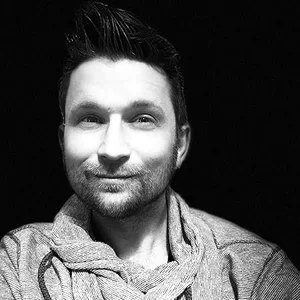
For much of my life, I was a follower.
As a child, I often looked to other people to decide what we were doing and where we were going. I would go along with their choices rather than risk making the wrong one myself. Over time, that uncertainty became part of how I approached life.
Whenever I had to make a decision, my mind would examine every possibility. What if I made a mistake? What if someone disagreed with me? What if something went wrong?
Thinking carefully can be helpful, but overthinking is different. It can leave us circling the same questions without bringing us any closer to an answer.
When thinking becomes overthinking
Overthinking is not a formal diagnosis. It is an everyday term for patterns such as repeatedly analysing situations, replaying conversations, worrying about future events or trying to reach complete certainty before acting.
There is rarely one single reason why somebody develops this pattern. For me, it was connected to anxiety, low confidence and a tendency to rely on other people’s judgement more than my own.
At its worst, my anxiety became overwhelming. I experienced agoraphobia and periods when leaving home felt extremely difficult. My world became smaller while my thoughts seemed to become louder.
I am sharing my experience because it shaped the way I understand overthinking. It does not mean that everybody’s experience will be the same.
The difference between reflection and rumination
Reflection can help us understand something, learn from it and decide what to do next. Rumination tends to repeat the same thoughts without producing a useful conclusion.
A helpful question is:
Is this thought helping me take a constructive next step, or am I repeating it because I am searching for certainty?
Complete certainty is rarely available. Sometimes the mind keeps analysing because it believes that one more thought will finally remove every risk. Unfortunately, the search for a perfect answer can prevent us from making any decision at all.
What Carl Rogers helped me understand
The work of psychologist Carl Rogers became important to me during my counselling training.
In person-cententred theory, our self-concept is the collection of beliefs and perceptions we hold about who we are. Our lived, moment-to-moment experience may not always fit comfortably with that picture.
Rogers used the term incongruence to describe a lack of alignment between our experience and our self-concept. He also wrote about conditions of worth: the messages we absorb about what we must do or be in order to feel accepted.
This helped me consider whether some of my decisions were guided by my own experience and values or by the person I believed other people expected me to be.
That does not mean every uncertain decision is evidence of incongruence. It simply offers one way of exploring why trusting ourselves can sometimes feel so difficult.
Writing at three in the morning
During periods when I could not sleep, I began writing.
At first, the writing was simply somewhere to put my thoughts. Instead of keeping everything inside my head, I could place it on a page and look at it from a little more distance.
One night, I began writing about a character called Felix. His story involved time travel, unexpected events and an unusual delivery man. The story gradually became something much larger than a distraction from anxiety. It allowed me to create, imagine and make decisions without needing somebody else to tell me what should happen next.
Writing did not instantly remove my anxiety or solve every problem. It did, however, give my thoughts somewhere to go.
The quotation often attributed to Viktor Frankl
A sentence frequently shared online says:
“Between stimulus and response there is a space. In that space is our power to choose our response.”
It is commonly attributed to psychiatrist and Holocaust survivor Viktor Frankl. However, the Viktor Frankl Institute has stated that it has been unable to verify that these exact words appear in Frankl’s work.
The source of the wording may be uncertain, but the idea still resonated with me: a difficult thought or feeling does not always have to dictate my next action.
Frankl’s own work proposed that the search for meaning is a primary human motivation. He did not suggest that people can simply think their way out of suffering. His writing explored the possibility of finding meaning and choosing an attitude or action even when circumstances cannot immediately be changed.
For me, this was not about blaming myself for anxiety. It was about gradually recognising that anxiety did not have to make every decision on my behalf.
What can help with overthinking?
There is no single technique that works for everybody, and persistent anxiety may require professional support. However, the following approaches can sometimes help.
Name what is happening
Try saying, “I am noticing that I am overthinking this,” rather than treating every thought as an established fact.
This small change can create some distance between you and the thought.
Separate facts from predictions
Write down what you know and what you are predicting.
For example:
Fact: I have sent the message and have not received a reply yet.
Prediction: They have not replied because I have upset them.
Predictions can feel convincing, but that does not make them facts.
Decide whether action is possible
Ask yourself:
Is there something practical I can do about this now?
If there is, what is the smallest useful step?
If there is not, can I return to it at a specific time?
The aim is not to force thoughts away. It is to decide whether they require action at this moment.
Give your thoughts a place to go
Writing, drawing, speaking aloud or making a voice note may help organise thoughts that feel tangled together.
You do not need to produce anything polished. The purpose is to move the thoughts from an internal loop into a form you can examine.
Practise making small decisions
If decision-making feels frightening, begin with choices that carry little risk. Make the decision, notice the discomfort and resist reopening it unless genuinely new information appears.
Confidence does not always come before action. Sometimes it develops through the experience of making manageable decisions and discovering that uncertainty can be tolerated.
Speak to somebody
Overthinking often becomes more intense when it remains private. A trusted friend, family member, counsellor or another appropriate professional may help you examine what is happening from a different perspective.
Counselling is not about somebody else making decisions for you. It can provide a confidential space in which you can understand your patterns, explore your feelings and decide what feels right for you.
My Own Personal Rebellion
Against everything that held me back
Coming back to myself
My relationship with overthinking has changed gradually rather than through one dramatic breakthrough.
Counselling training, personal reflection and creative writing have all helped me develop a stronger sense of my own voice. I still think deeply about things, but I am better able to recognise when careful thought has become an exhausting search for certainty.
I later completed a BSc (Hons) in Sport, Fitness and Coaching, a Postgraduate Certificate in Childhood and Youth Development, and professional training in therapeutic counselling. These different parts of my experience now inform the way I work.
I currently offer one-to-one counselling. Coaching services are planned for 2027, alongside future creative and story-based workshops. I also continue to write books and poetry exploring identity, change and the process of coming back to yourself.
You do not have to eliminate every uncertain thought before moving forward. Sometimes the next step is simply noticing the thought, allowing it to be present and choosing one small action that reflects what matters to you.
Important information
This article shares personal experience and general information. It is not a diagnosis, medical advice or a substitute for support from an appropriately qualified professional.
If anxiety or overthinking is significantly affecting your daily life, you may wish to speak to your GP or a qualified mental health professional.
If you are in immediate danger or unable to keep yourself safe, call 999 or go to A&E. In the UK and Republic of Ireland, Samaritans can be contacted free at any time on 116 123. In the UK, you can also text SHOUT to 85258 for confidential crisis support.
References
Frankl, V. E. (2006). Man’s Search for Meaning. Beacon Press. Originally published in 1946.
Rogers, C. R. (1959). A theory of therapy, personality, and interpersonal relationships as developed in the client-centred framework. In S. Koch (Ed.), Psychology: A Study of a Science, Volume 3. McGraw-Hill.
Viktor Frankl Institute Vienna. The alleged Frankl quote.
https://www.viktorfrankl.org/quote_stimulus.html