There is a very large dish standing in a field in Cheshire.
It is 76.2 metres across, weighs approximately 3,200 tonnes and has spent nearly seventy years listening to radio waves arriving from space.
And you can stand underneath it.
Pictures do not prepare you for the Lovell Telescope. You can understand the measurements, see photographs and watch videos, but none of those things quite communicates what it feels like to look up at it in person.
It is enormous, extraordinary and somehow perfectly at home in the Cheshire countryside.
Where Is It?
Jodrell Bank is near Lower Withington, not far from Macclesfield. It is a working radio astronomy observatory, a visitor attraction and a UNESCO World Heritage Site.
The site is part of the University of Manchester and is home to several radio telescopes. Its most recognisable structure is the Lovell Telescope, one of the largest fully steerable radio telescopes in the world.
It is also, in my experience, one of those places that does something genuinely useful to your mind.
It makes everything go quiet for a while.
The Lovell Telescope — A Brief and Brilliant History
The story of Jodrell Bank began in 1945, when physicist Bernard Lovell arrived at the site to investigate cosmic rays using radar equipment developed during the Second World War.
The location was useful because it was away from much of the radio interference found in Manchester. The work carried out there helped establish radio astronomy as an important new way of studying the Universe.
Construction of what was then called the Mark I Telescope began in 1952. It was completed in 1957 and, at the time, was the largest fully steerable radio telescope in the world.
Its timing could hardly have been more dramatic.
On 4 October 1957, the Soviet Union launched Sputnik 1, the first artificial satellite to orbit Earth. The newly completed telescope at Jodrell Bank tracked the carrier rocket that had launched Sputnik into space.
This was the beginning of the Space Age, and an enormous telescope in a Cheshire field was there to witness it.
The telescope was renamed the Lovell Telescope in 1987, in honour of Sir Bernard Lovell.
Over the following decades, work at Jodrell Bank contributed to research involving quasars, pulsars, black holes, gravitational lenses and the cosmic microwave background—the faint radiation left from the early Universe.
The Lovell Telescope remains scientifically active today and forms part of e-MERLIN, a network of radio telescopes located across England.
Not bad for something built in a field in Cheshire.
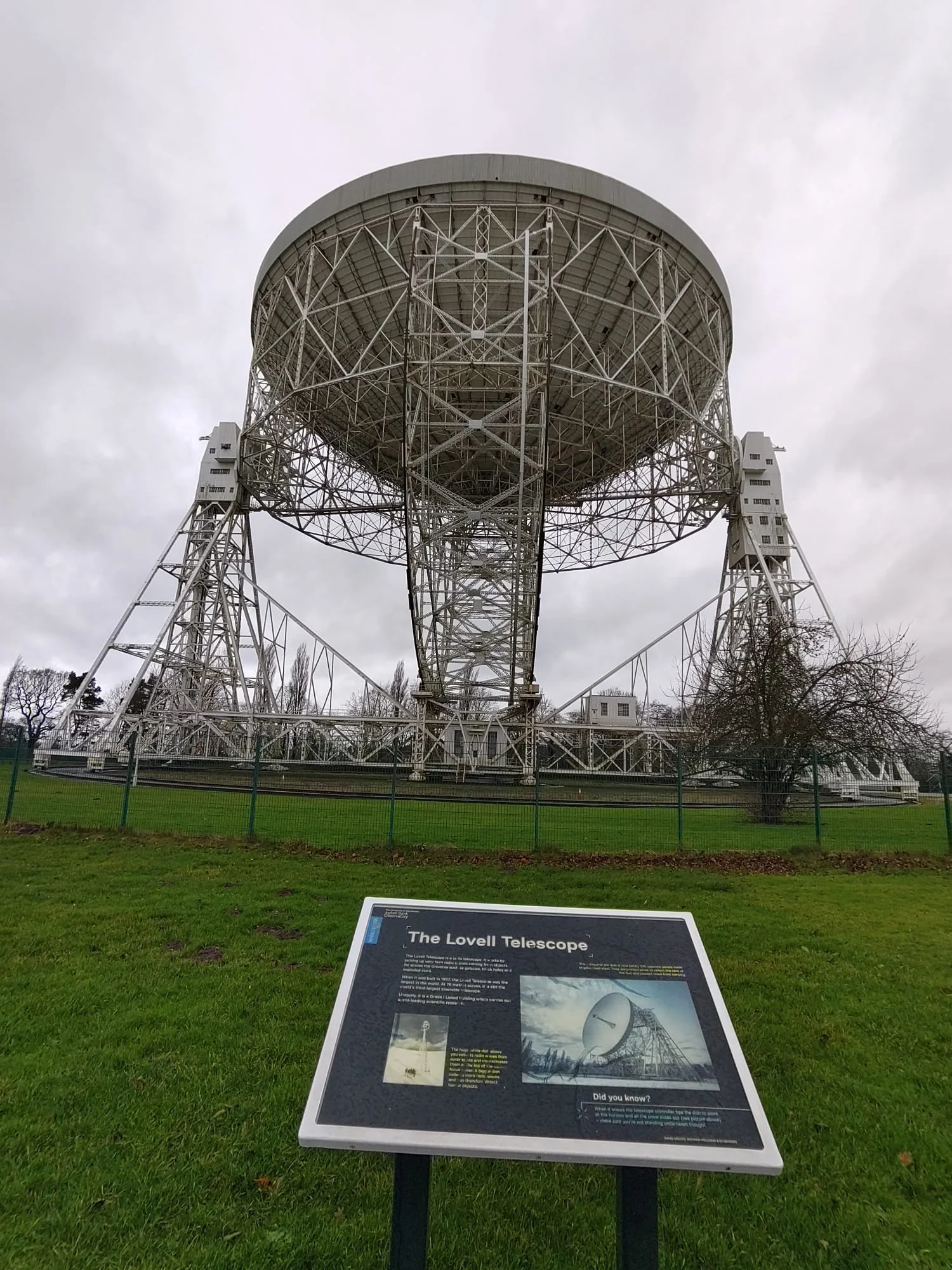
The Lovell Telescope—it’s extraordinary. Pictures do not do it justice.
The Space Dome — Cinema, but Make It Cosmic
The First Light Pavilion explores the history and scientific work of Jodrell Bank. Its circular design reflects the shape and scale of the Lovell Telescope’s dish.
Inside, the Space Dome offers immersive films and presentations about astronomy and space. The programme changes, and some Dome shows require an additional ticket, so it is worth checking what is available when arranging your visit.
Watching the Universe spread across the Dome is completely different from viewing it on a laptop or television.
There is the darkness, the sound and the strange feeling of your mind attempting to comprehend the scale of space before quietly admitting defeat.
It is spectacular.
Worth it. Very much worth it.
The Ticket — More Than One Visit
General admission tickets are currently issued as annual tickets, allowing you to make return visits during the following twelve months.
Some events and additional experiences, including certain Dome shows, are not included in general admission. Prices and arrangements can change, so check the official website before travelling rather than relying on the details in an older article.
One ticket gives you the opportunity to experience the site during different seasons. You could visit when the grounds are quiet in winter and return when everything is green during the summer.
There are cafés serving food and drink, but you can also take a packed lunch. Sitting outside with the Lovell Telescope looming in the background is one of those simple experiences that stays with you.
The Grounds — More Than Just the Telescope
The telescope may dominate the skyline, but there is more to explore around the site.
There are exhibitions, picnic spaces, outdoor areas and an arboretum. You can spend time learning about astronomy and engineering before finding somewhere quieter to walk, sit or eat.
Take your time. Wander around. Sit down for a while. Look at something that is not a screen.
You can genuinely lose yourself in here. Wander. Sit. Look at things that aren't a screen.
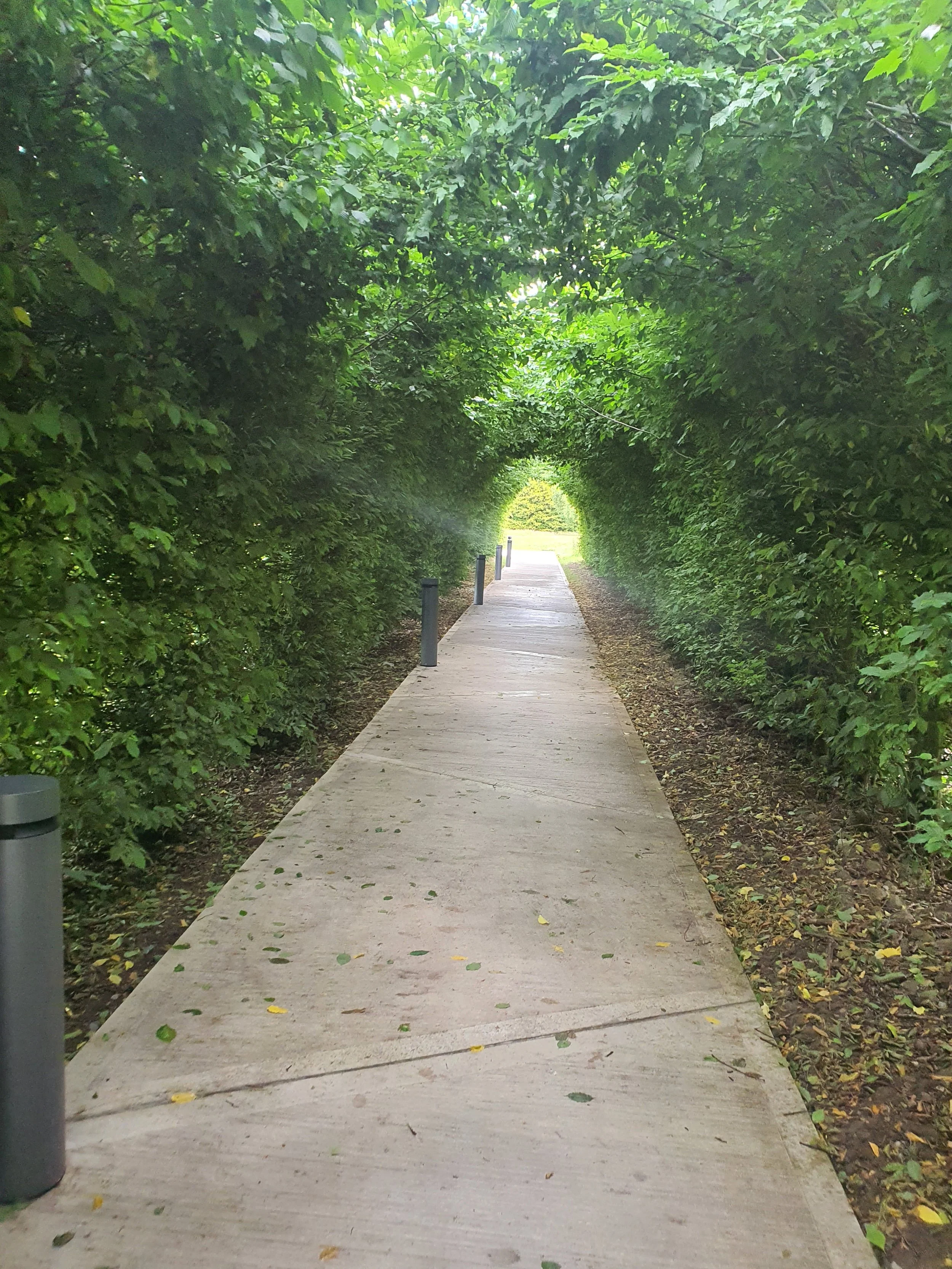
Take a picnic and give yourself time to explore. There are some lovely places to sit quietly and step away from the world for a while.
Jodrell Bank remains a working observatory, not merely a visitor attraction.
Radio telescopes detect extremely weak signals arriving from space. This makes protecting the observatory from unnecessary radio interference important, so visitors should follow any guidance displayed at the site concerning phones and other wireless equipment.
Your phone may need to remain in your pocket for a while.
And you know what? You will be fine.
The Universe was getting along without your notifications long before you arrived, and it will continue doing so while you stand in a field, look up at an enormous telescope and think about how extraordinary it is that human beings built this structure and pointed it towards the sky to listen.
Why I Am Telling You This
I have previously written about getting away from screens, climbing a hill and going out to experience the world rather than only watching other people experience it.
Jodrell Bank offers the same argument, but pointed upwards.
We can see extraordinary images of space without leaving the sofa. We can watch rocket launches, explore computer-generated galaxies and ask artificial intelligence to describe distant worlds.
Those things can be fascinating, but they cannot reproduce the feeling of standing underneath the Lovell Telescope.
This is the real structure that began working at the dawn of the Space Age. It has spent decades receiving signals that have travelled across distances most of us will struggle to imagine.
Standing beside it made me feel small.
Not insignificant. Not unimportant.
Simply small enough for some of my worries to return to their proper size.
The observable Universe is estimated to be approximately 93 billion light-years across. Against that kind of scale, the thoughts occupying our minds can briefly loosen their grip.
The problems do not disappear. A day out is not a treatment for anxiety, and gaining perspective does not invalidate whatever somebody is experiencing.
Sometimes, however, changing our surroundings can interrupt the familiar noise. It can remind us that the world is larger than the situation currently filling our thoughts.
For me, Jodrell Bank provided that reminder.
It is, I would argue, one of the most affordable forms of perspective available in the north of England.
Planning a Visit
Admission arrangements, opening times, prices and Space Dome programmes can change, so check the official Jodrell Bank website before travelling.
Jodrell Bank Centre for Engagement
Bomish Lane
Lower Withington
Cheshire
SK11 9DW
Official website:
https://www.jodrellbank.net
You have the address.
You have the excuse.
What are you doing this weekend?
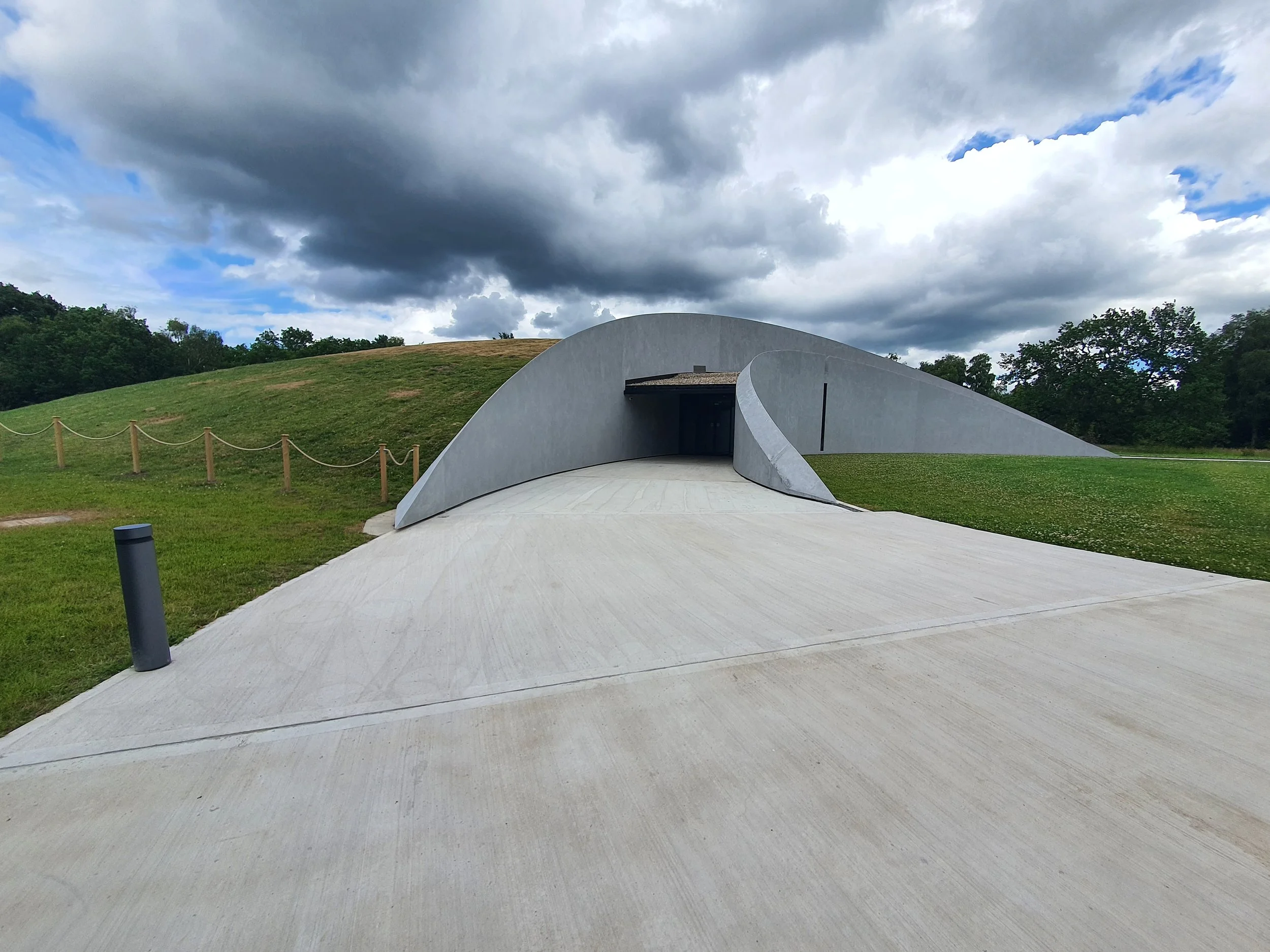
Well, my fellow humans, inside there, is one of the most spectacular rooms. I dare you to treat yourself to a trip.
And for today, that is all. I simply wanted to share somewhere extraordinary to visit in beautiful Cheshire.
All factual and visitor information was checked at the time of updating, but admission arrangements may change. Please consult the official website before travelling.
Sources
Jodrell Bank Centre for Engagement:
https://www.jodrellbank.net
Jodrell Bank Centre for Astrophysics, University of Manchester:
https://www.jodrellbank.manchester.ac.uk/about/history-and-heritage/
UNESCO World Heritage Centre—Jodrell Bank Observatory:
https://whc.unesco.org/en/list/1594/